Economía Circular en Comunidades Hispanas EE.UU. 2026

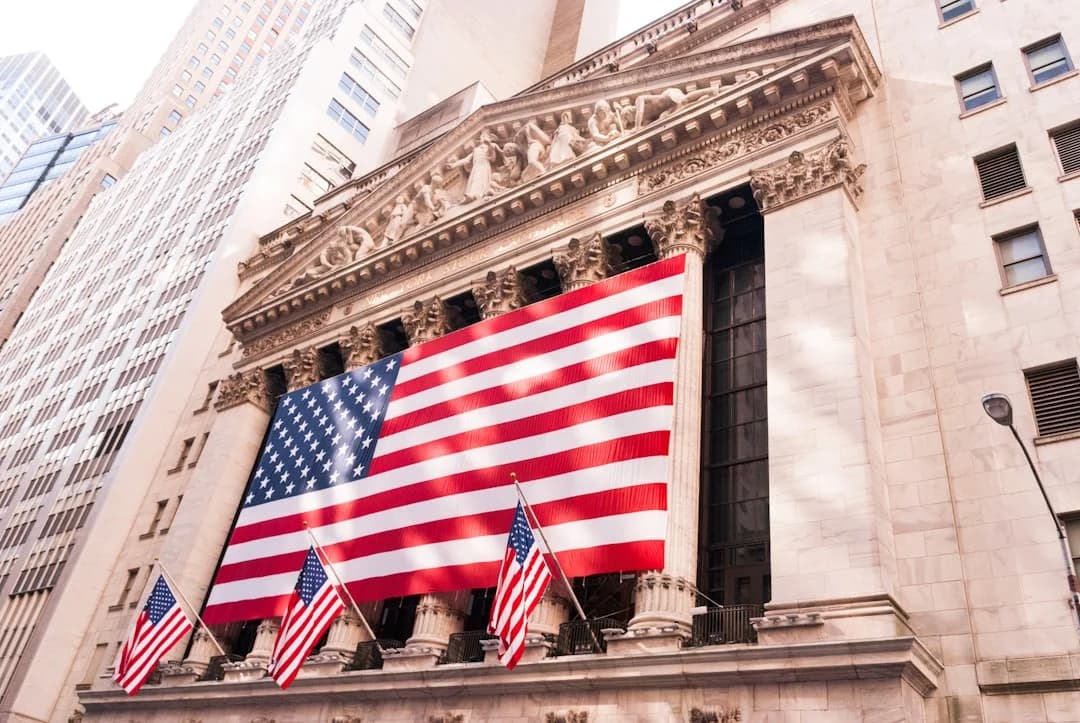
Photo by David Vives on Unsplash
Opening the news cycle of 2026 centers on a defining shift for Hispanic communities across the United States: a growing integration of circular economy principles into business models, policy dialogues, and community-led initiatives. In early 2026, major policy and industry players announced high-visibility moves intended to accelerate a more sustainable, inclusive economy where Hispanic entrepreneurs, workers, and residents gain clearer access to resources, markets, and circular pathways. The immediate impact is tangible: new partnerships, funding streams, and policy conversations that increasingly place circularity at the core of technology adoption and market strategy in Hispanic communities across the United States. This coverage provides data-driven context on what is happening, why it matters, and what to expect next as 2026 unfolds.
The momentum is global in scope but distinctly local in footprint. In February 2026, Aspen Conexión and the U.S. Hispanic Chamber of Commerce (USHCC) announced a three-year Memorandum of Understanding designed to expand economic opportunities for Hispanic-led small and mid-sized businesses in the United States and abroad. The collaboration emphasizes nearshoring, cross-border market connections, and the alignment of trade and public finance with inclusive outcomes—an alignment that resonates with circular economy ambitions, since circularity often requires rethinking supply chains, materials, and collaborations across borders. The signing, on February 27, 2026, marked a formal step to fuse Hispanic business leadership with policy and financial ecosystems that can finance and scale circular economy practices. As Pilar Frank-O’Leary of Aspen Conexión noted in the release, “Latino-owned businesses are a growing competitive advantage for the U.S. economy—and a vital force in how the United States competes globally across the Americas.” (aspeninstitute.org)
Meanwhile, the packaging and materials sector—an essential lever for any circular economy strategy—took a significant step forward in February 2026 with the U.S. Plastics Pact’s release of a practical framework aimed at advancing film and flexible packaging circularity. The Journey to Film & Flex Circularity framework identifies design, collection, and end-market levers as critical to achieving real circular outcomes. Importantly, the framework emphasizes that progress will vary by community size, infrastructure, and local policy contexts, underscoring the need for localized implementation—precisely the kind of approach that can benefit Hispanic communities as small businesses adopt packaging innovations and consumers demand more sustainable packaging choices. The February 11, 2026 release sets a roadmap for coordinated action among manufacturers, users, and policymakers, and it explicitly calls for end-market development as a central lever. (usplasticspact.org)
From a cultural and civic angle, Circle America Summit: Circular Economy and Culture, held on February 26, 2026, spotlighted how circular economy principles can be embedded into public awareness and everyday practices. EarthX’s coverage shows a clear intent to educate and mobilize the public around building a circular culture, with a program that highlights policy, market, and cultural drivers of the transition. The summit also announced Circle America, a campaign to educate and engage citizens nationwide. This kind of public-facing, culture-centric pivot matters for Hispanic communities whose engagement with sustainability is often mediated through family- and community-based channels. (earthx.org)
Beyond industry events, regional collaboration and capacity-building efforts are underway across the hemisphere to promote circular economy adoption in communities that include large Hispanic populations. The Organization of American States (OAS) has highlighted initiatives like CircularAmericas, a 2024–2026 program designed to build capacity and align policies with circular economy objectives across member states in the Americas. The program’s documented goals include stakeholder education, policy alignment, and enhanced professional skills to implement circular economy practices. While not Hispanic-specific, CircularAmericas provides a governance and financing scaffold that can enable Hispanic-focused communities to participate more fully in circular value chains. (oas.org)
As a baseline for context, demographic and economic data about Hispanic communities in the United States remains essential to understanding the potential for a broader, inclusive circular economy. The Hispanic population continues to represent about one-fifth of the U.S. population, with estimates around 68 million people in 2024 at roughly 20% of the national total, according to American Community Survey data and corroborating analyses from the Census Bureau and reputable research organizations. This demographic is a substantial consumer base, a growing workforce, and a driver of small-business activity, all of which create opportunities and challenges for circular economy initiatives at the local and national levels. (minorityhealth.hhs.gov)
What Happened
Alianza estratégica para hispanic-led growth
Signing of the Aspen Conexión–USHCC MOU (Feb 27, 2026)
On February 27, 2026, Aspen Conexión and the U.S. Hispanic Chamber of Commerce signed a three-year Memorandum of Understanding aimed at expanding opportunities for Hispanic-led small and mid-sized businesses. The agreement signals a shared commitment to increasing access to domestic and international markets, mobilizing capital, and strengthening the ecosystem that supports Hispanic business leadership. The MOU envisions knowledge exchange, joint convenings, and grant-supported projects as core vehicles for advancing inclusive growth, with a particular emphasis on supply chain resilience and market integration—areas where circular economy thinking can play a decisive role. The parties stress that inclusive growth requires aligning trade, investment, and industrial policy with equitable outcomes that reach underserved communities across U.S. districts and cross-border regions. “This partnership reflects our shared commitment to ensuring that Hispanic-owned businesses are fully included in the economic opportunities shaping the future of the American economy,” said Ramiro A. Cavazos, President & CEO of the USHCC. Pilar Frank-O’Leary, Executive Director of Aspen Conexión, highlighted that the collaboration seeks to connect regional leadership with institutions shaping capital, trade, and investment. The MOU’s form—knowledge exchange, convenings, network-building, and technical assistance—maps cleanly onto circular economy pathways that require cross-sector collaboration and regional experimentation. (aspeninstitute.org)
Fronteras y mercados: nearshoring y regional integration
The Aspen Conexión–USHCC initiative arrives at a moment when nearshoring, cross-border trade, and regional market integration are being framed as strategic assets for U.S. Hispanic communities. The news release emphasizes access to new markets, capital, and cross-border networks as pathways to broader inclusion and growth. In practice, circular economy transitions—where companies design for reuse, remanufacturing, and local closing of material loops—often rely on stronger regional collaborations between suppliers, manufacturers, and community-based organizations. This alignment is particularly relevant in districts with large Hispanic populations and dense logistical networks, where the ability to shorten supply chains and repurpose materials can translate into tangible cost savings and resilience. (aspeninstitute.org)
La promesa de circularidad en el empaquetado y consumo
Frameworks y design for circularity en film y packaging
The U.S. Plastics Pact’s Journey to Film & Flex Circularity framework released on February 11, 2026, undertakes a systemic view of how to redesign packaging, improve collection, and develop end markets for recycled film. The document stresses that “end market development is the most critical lever for change” and that “there is no single, universal solution for film collection.” For Hispanic communities—where small businesses and local retailers often depend on flexible packaging—the framework offers a blueprint for how cities and states can tailor circularity programs to local conditions, ensuring that solutions are not one-size-fits-all but instead account for community size, infrastructure, and local regulations. (usplasticspact.org)
The cultural and consumer dimension
Circle America Summit’s focus on culture as an enabler of circular systems reinforces that adoption of circular practices is not purely technical. It requires shifting consumer expectations, business habits, and policy incentives in tandem. For Hispanic communities, who often anchor households and small businesses in multi-generational networks and trusted local institutions, embedding circular practices into everyday routines—such as repair, reuse, and community-based recycling initiatives—can be particularly impactful. The summit’s emphasis on public education and mobilization aligns with the needs of diverse communities that may rely on culturally resonant messaging and locally trusted partners to drive participation. (earthx.org)
Regional capacity-building and hemispheric coordination
The CircularAmericas program, with a duration spanning 2024–2026, signals a broad, cross-border approach to building capacity for circular economy adoption across the Americas. While not Hispanic-community-specific by design, its activities—workshops, policy alignment, and knowledge sharing—create opportunities for U.S. Hispanic communities to plug into a wider regional ecosystem that values resource efficiency, innovation, and sustainable growth. Engagement through OAS channels means potential access to funding, technical assistance, and policy guidance that can be adapted to statewide or local programs benefiting Hispanic communities. (oas.org)
Why It Matters
Demografía y poder de consumo
El peso de la población hispana en la economía estadounidense
The Hispanic population continues to be a central driver of demographic and economic change in the United States. Recent analyses show that Hispanics account for roughly 20% of the U.S. population, with the number hovering around 68 million in 2024 according to American Community Survey data and peer sources. This demographic not only represents a large labor force but also a substantial and growing consumer base with rising purchasing power. As the economy shifts toward circular models—where materials, products, and services are optimized for reuse and extended life—the Hispanic market represents both a beneficiary and a driver of circular strategies, given its scale and dynamism. (census.gov)
Economic sentiment and progress
A recent multi-source snapshot of Latino economic sentiment in 2026 underscores that the economy remains a central concern for Hispanic families, even as forces like inflation, housing costs, and access to affordable healthcare shape daily choices. The Hispanic Federation’s 2026 State of the Latino Family in the U.S. highlights that many Latinos view the economy as a top priority, with concerns about cost of living, wages, and the stability of benefits rising to prominent positions on policy agendas. While not a measure of circularity itself, this sentiment—paired with growing interest in sustainable products and local job opportunities—creates a fertile ground for circular economy initiatives that generate local employment, skill-building, and price competitiveness for Hispanic-owned businesses. (hispanicfederation.org)
Infraestructura, política y mercado
Infraestructura de reciclaje, diseño y demanda de material
A central challenge for advancing economía circular en comunidades hispanas de Estados Unidos 2026 is the alignment of design, collection, and end-market demand with local infrastructure. The USPP framework explicitly calls for context-sensitive strategies—different communities require different collection methods, processing capacity, and market demand for recycled content. For Hispanic communities that often cluster in urban and peri-urban settings with varied waste-management infrastructure, tailoring approaches to local MRF (materials recovery facility) capabilities and local market conditions is essential. This is not only a technical adjustment but a policy and funding question as well—municipal, state, and federal partners must synchronize incentives, standards, and investment to ensure practical and scalable outcomes. (usplasticspact.org)
Public policy and cross-border collaboration
Policy alignment is a recurring theme across the 2026 circular economy discourse. The OAS CircularAmericas initiative, the Aspen Conexión–USHCC collaboration, and Circle America’s cultural programming all point to a broader ecosystem in which policy innovations, finance, and civil society converge to accelerate circularity. The shared aim is to design policies and programs that make circular practices accessible to small businesses and community organizations—especially within Hispanic communities—while ensuring that local preferences and cultural contexts are respected. As the OAS document notes, building capacity and aligning policies are critical steps toward broader implementation. (oas.org)
Casos y lecciones de la realidad estadunidense
Empresas hispanas y economía circular
The Aspen Conexión–USHCC collaboration is a clear signal that Hispanic-led businesses are increasingly seen as engines of innovation and inclusive growth. While the MOU itself focuses on growth, finance, and cross-border opportunities, the implicit circular economy lesson is that Hispanic firms can act as pilots for circular practices—testing new business models, sharing best practices, and scaling circular innovations to regional and international markets. This is especially relevant for small and mid-sized Hispanic enterprises that operate across supply chains where materials reuse, refurbishing, and local sourcing can improve resilience and competitiveness. (aspeninstitute.org)
Packaging, waste, and local markets
The USPP’s framework acknowledges that the path to circular packaging is both material- and market-specific. By focusing on design and end markets, the framework helps align manufacturers with recycling capacity and policy incentives that can support the circular economy in communities with large Hispanic populations. For Hispanic retailers and manufacturers that rely on flexible packaging, this framework suggests a practical, phased approach to circularity that starts with reducing packaging where possible and then expanding to reuse and recycling where infrastructure supports it. The emphasis on end markets is particularly relevant for communities that want to see demand growth for recycled content and for products designed for longer life or repairability. (usplasticspact.org)
Culture as a catalyst
Public-facing initiatives like Circle America emphasize culture as a driver of systemic change. When circular economy messaging resonates with community identities, values, and local leadership, adoption is more durable. Hispanic communities—often organized around family networks, local churches, gremios, and business associations—may be especially receptive to culturally appropriate messaging, community-based programs, and partnerships with trusted local institutions. This cultural dimension is not a footnote; it is a strategic element of any plan to scale economía circular within Hispanic communities. (earthx.org)
What’s Next
Timeline y próximos hitos para 2026–2027
Iniciativas y calendario regional

Photo by Weigler Godoy on Unsplash
- Feb 27, 2026: Aspen Conexión–USHCC MOU signing, signaling a three-year program to expand Hispanic-led business opportunities with an emphasis on inclusive growth and cross-border market integration. Expect further joint convenings and co-funded projects in 2026–2028. (aspeninstitute.org)
- Feb 11, 2026: US Plastics Pact releases Journey to Film & Flex Circularity, outlining design, collection, and end-market levers for film and flexible packaging. The framework emphasizes tailoring approaches to local conditions, a critical consideration for communities with diverse infrastructure profiles, including many Hispanic-majority municipalities. (usplasticspact.org)
- Feb 26, 2026: Circle America Summit highlights the cultural dimension of circularity and launches Circle America as a campaign to educate and mobilize the public around circular culture. Expect heightened media coverage, policy engagement, and community outreach in the months ahead. (earthx.org)
- 2024–2026: CircularAmericas program and OAS CircularAmericas activities continue to build capacity and promote policy alignment across the Americas. Although not exclusively focused on Hispanic communities, these efforts create structural opportunities for U.S. communities to leverage regional expertise, funding, and best practices. (oas.org)
What to watch in 2026–2027
- Local government adoption of circular economy pilots that incorporate Hispanic-serving organizations and small businesses, especially in urban centers with high Hispanic populations. The intersection of municipal waste programs, procurement policies, and economic development strategies will likely yield tailored initiatives that emphasize repair, reuse, and material recovery in Hispanic neighborhoods.
- Growth in demand for recycled content and circular packaging solutions in communities with substantial Hispanic consumer bases. The USPP framework pushes for end-market development as a prerequisite for meaningful circularity in packaging across multiple states and cities, and Hispanic communities could be early beneficiaries where consumer demand translates to local investment in recycling infrastructure and circular supply chains. (usplasticspact.org)
- Public education and civic engagement efforts that foreground circular culture in Hispanic communities. The Circle America campaign and related cultural initiatives can help mainstream circular practices in daily life, school curricula, and local businesses, creating a supportive environment for circular economy experiments. (earthx.org)
Closing
As 2026 unfolds, the convergence of policy momentum, industry frameworks, and community-level engagement creates a convergent path for economía circular en comunidades hispanas de Estados Unidos 2026. The MOU between Aspen Conexión and USHCC formalizes a commitment to inclusive growth and cross-border opportunities, while the USPP’s design-for-circularity framework and Circle America’s cultural emphasis signal that the transition to a more circular economy will be both technically grounded and culturally resonant. The hemispheric and regional coordination reflected in CircularAmericas and OAS programs offers additional scaffolding to scale these efforts, ensuring that progress in circularity translates into real benefits for Hispanic communities—from improved job opportunities and local entrepreneurship to more resilient supply chains and sustainable consumer choices.
In short, the year 2026 marks a pivotal moment for economía circular en comunidades hispanas de Estados Unidos 2026. With leadership from Hispanic commerce organizations, innovative packaging and materials policies, and a growing public appetite for sustainable growth, Hispanic communities stand at the forefront of a transformative shift in how the United States designs, uses, and recycles the resources that power daily life. As these initiatives mature, readers should expect ongoing updates on policy changes, funding opportunities, and on-the-ground case studies that reveal both the promise and the challenges of building a circular economy in diverse urban and rural contexts. The coming months will reveal how quickly circular strategies can scale within Hispanic communities, and which models prove most effective in delivering measurable economic and environmental benefits.
In the meantime, staying informed means following press releases from the Aspen Conexión–USHCC partnership, monitoring the US Plastics Pact’s ongoing work on packaging circularity, and watching Circle America’s public campaigns for actionable ways to participate in a circular culture at home, in schools, and in local businesses. By keeping a close eye on these developments, readers can understand not just what is happening, but how these changes could reshape the economic landscape for Hispanic communities across the United States in 2026 and beyond.